17. Finding Help
Table of Contents
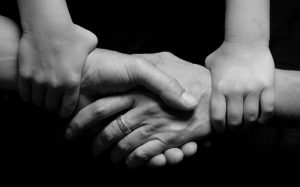 Support, which can take a variety of forms, is another one of the key ingredients to living well with long-term illness.
One kind of support is acceptance, and on this score, I was lucky. My family and closest friends believed that I had a serious medical condition and approved of my strategy of drastically reducing my activity level.
I was especially fortunate to have a good friend who was concerned about me and willing to offer both emotional support and an objective view of my situation. We talked about my CFS often and set aside some time at the first of each month to discuss how I was doing. We each assessed my status using the Rating Scale I’ve mentioned, then reviewed my logs for the previous month.
I learned much from the discussions, recognizing patterns I wasn’t able to spot on my own. Just as important, the discussions said that I was not struggling alone, but rather that there was somebody who cared about me and wanted to help me get better. I think the sessions also helped reduce my friend’s sense of helplessness, which is often experienced by people close to those who are seriously ill.
Support from Fellow Patients
A second kind of support is an understanding that perhaps only fellow patients can provide. As mentioned earlier, one of the first things I did after receiving my diagnosis was to join two local CFS support groups. Based on previous experience, I thought that fellow patients would be great resources for understanding my illness and they were.
I made two good friends, one from each support group. I remember spending many hours with each one on the phone in the first few months I was ill. They were immensely helpful, orienting me to the world of CFS. Talking with them helped me to understand how serious and debilitating an illness I had.
These two people and the CFS support groups gave me a sense of belonging, a feeling of being connected to others at a time of confusion and isolation. I found there is something powerfully healing about feeling understood, all the more so for a stigmatized disease that many don’t believe is real. Also, fellow patients were tremendous sources of information and perspective, helping me to understand CFS much more quickly than I could have on my own.
Models of Improvement
I experienced a powerful type of support from two fellow patients, neither of whom I met. I knew them through articles they wrote and, in the second case, via email as well. They provided me with models of living successfully with CFS. As such, they were sources of inspiration and hope, and also offered specific strategies I could use.
The first was Dean Anderson, who described his successful eight-year struggle to recover from CFS in an article in the CFIDS Chronicle titled “Acceptance, Discipline and Hope: A Story of Recovery from CFIDS.” I was inspired by the article the first time I read it and I returned to it often for encouragement. Dean had adopted an approach similar to mine. Turning away from medical treatments, he instead focused on figuring out what he could do to make himself better through changing his attitudes and behaviors. His improvement was a symbol of hope to me. I found inspiration in his description of combining acceptance of being ill with hope for a better life.
The other CFS patient who influenced and inspired me was JoWynn Johns. She was effectively housebound at the time we first came into contact, but she, too, had an inspiring story to tell, which she also shared with the readers of the Chronicle in an article titled “Living Within My Envelope: A How-To Story”. Following an approach similar to mine, she had reduced her symptoms greatly over a period of several years. By keeping records, she developed a detailed understanding of what she had to do to control her symptoms. And she believed successful adaptation meant changing one’s daily habits and routines.
My Doctor
In addition to all the people described above, my doctor played an important role in my recovery, mostly by being supportive of my approach to CFS. His attitude was consistent with his treatment of me before I became ill. In my appointments with him before I got CFS, he communicated his belief in a partnership between physician and patient. This relation was expressed in his practice of offering various treatment options and then letting me decide.
In the time before CFS, he had also communicated to me a view of the limitations of modern medicine. He said that there were many more illnesses than medicine had names for and not all those with names had treatments. The conclusion I drew was that, in spite of all the advances in recent decades, the realm of ignorance in medicine is probably much greater than the realm of knowledge.
Another part of his approach was useful as well. He had been honest with me about the limitations of lab testing when I had an earlier episode of fatigue. Remembering my doctor’s view of medicine’s limits and my prior success in using self-help, I felt validated in my conclusion that behavior change offered me the best chance for improvement from CFS.
CFS Self-Help Program
A final source of support came from the people I met in the self-help program I created.
I started looking for a self-help program for people with CFS almost as soon as I was diagnosed. My work at Stanford had shown me that self-help could be a powerful complement to medical care. I had seen people gain greater control, improve their quality of life and sometimes even change the course of their illness by taking responsibility for those things under their control. Not all self-help groups are helpful, but those that are deliver practical tips, counteract isolation, offer a sense of community, and provide hope in the form of people living successfully with serious illness.
When I couldn’t find any such group for people with CFS, I decided to start one. Believing it was important to be around people who were both realistic and positive, I tried to create a setting in which people could share what worked to help them feel better. Because I had stopped working and dropped out of my volunteer commitments shortly after becoming ill, fellow PWCs (People with CFS) became perhaps my most important community.